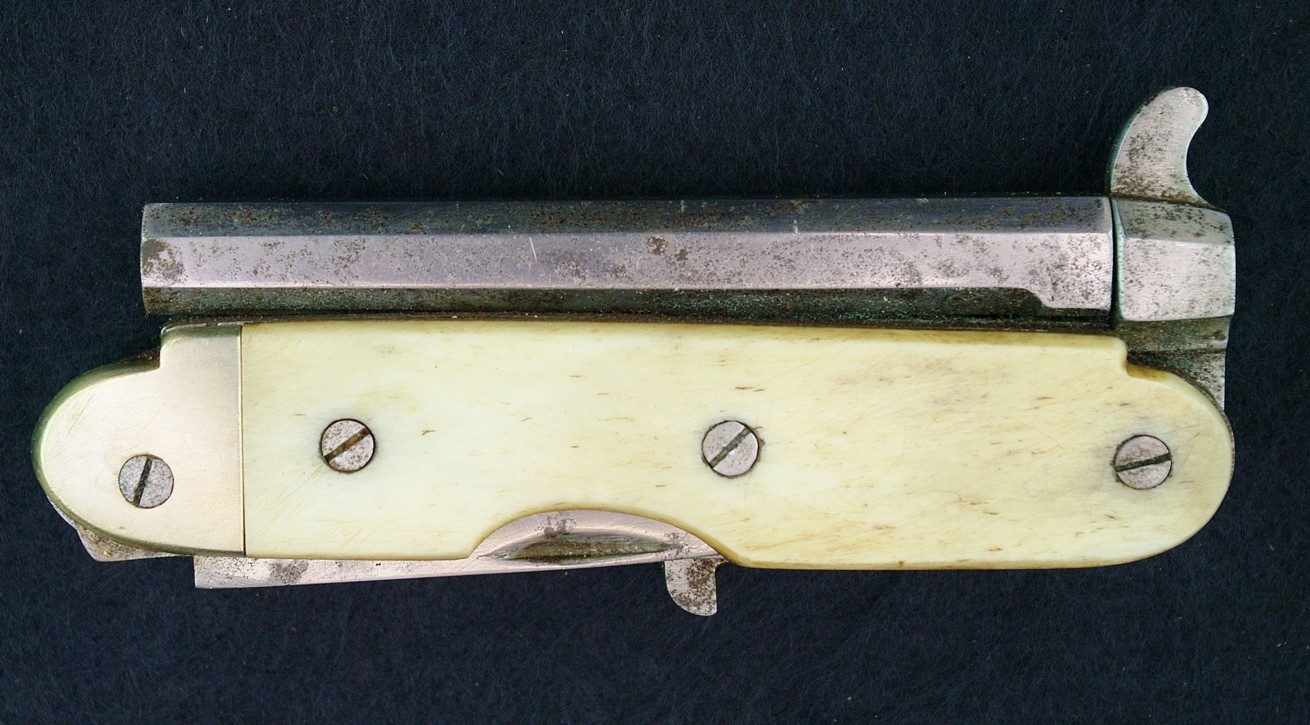
Percussion
Knife and Fork Pistol
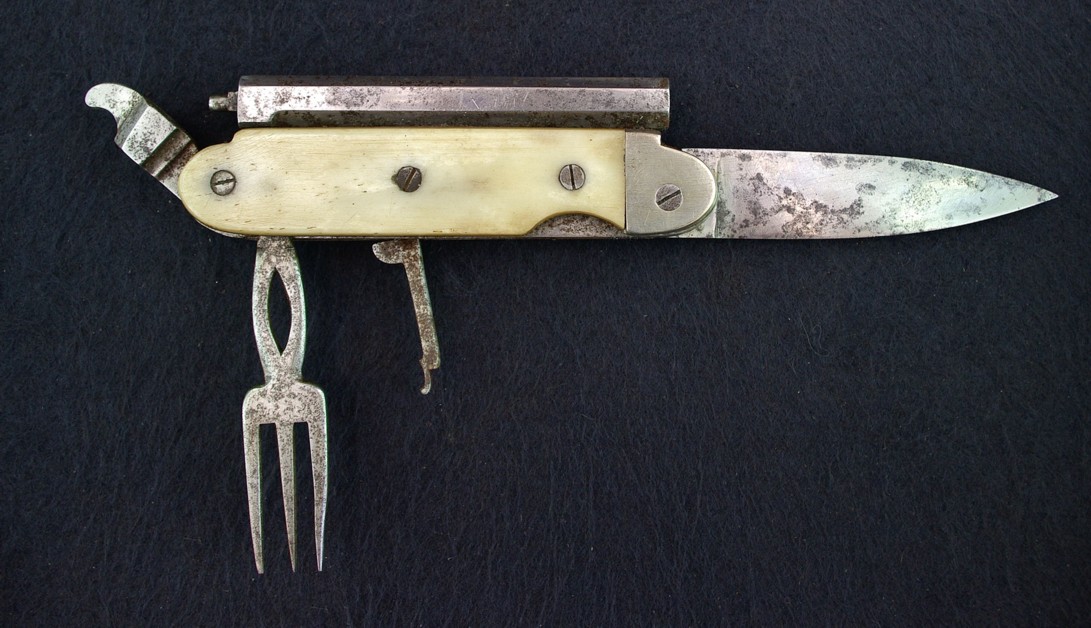
This percussion
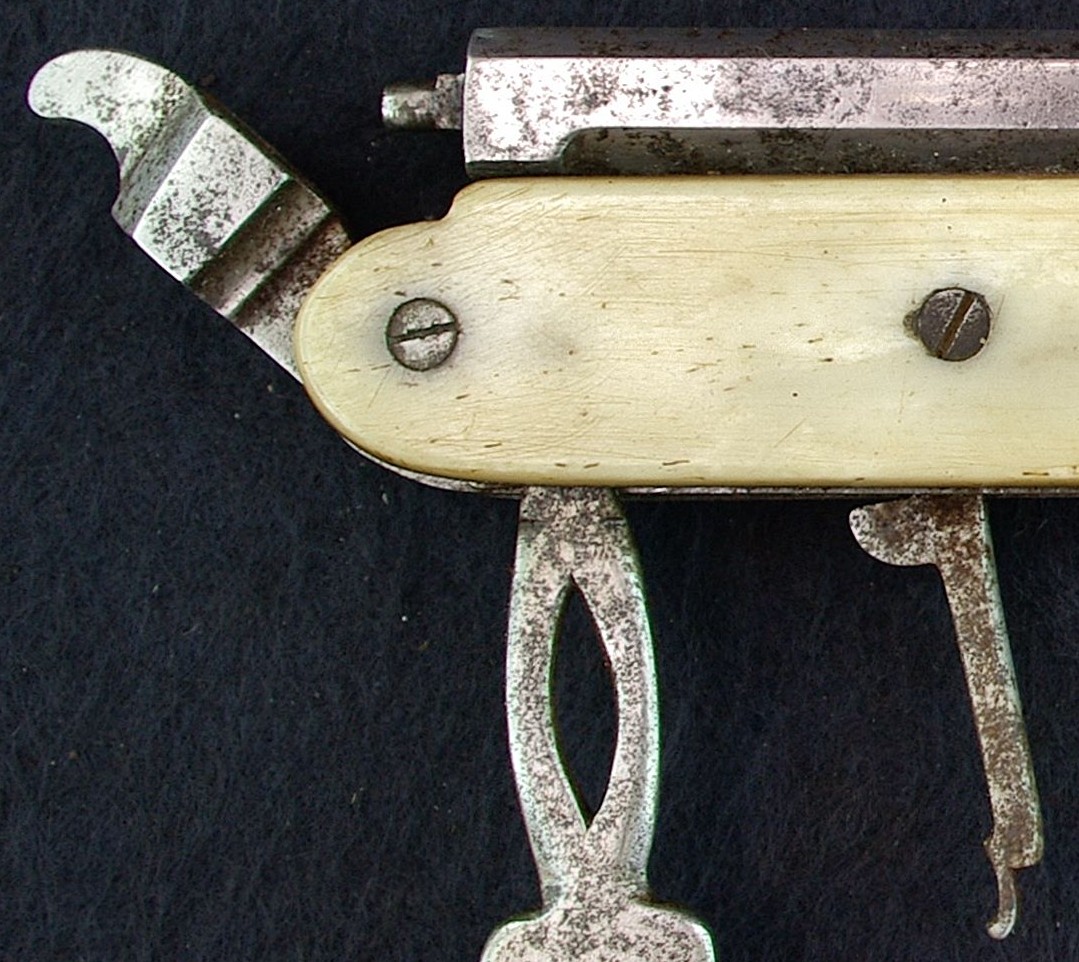
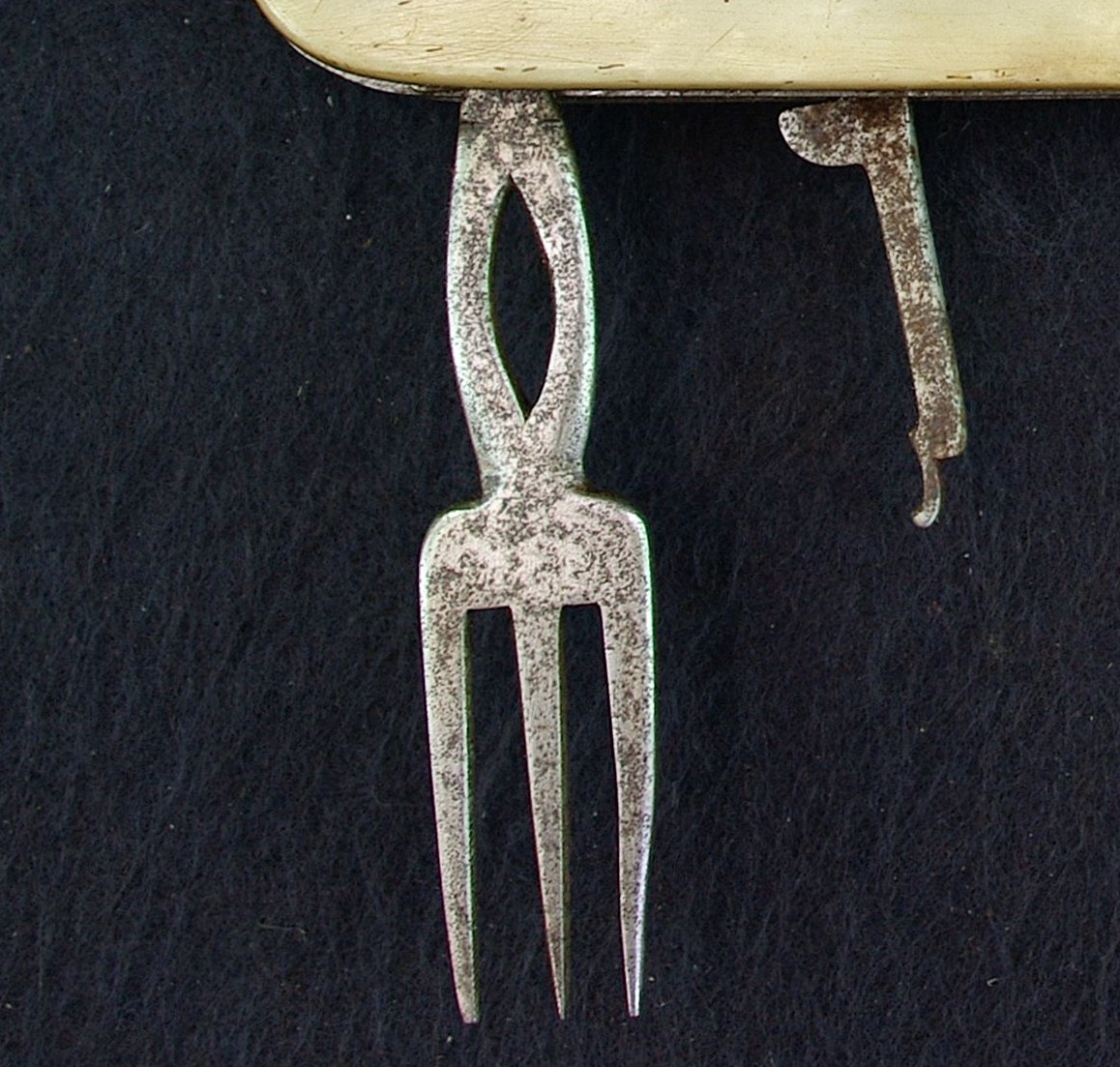
pocket knife pistol uses the 3" fold-out fork as a handle to hold the gun when
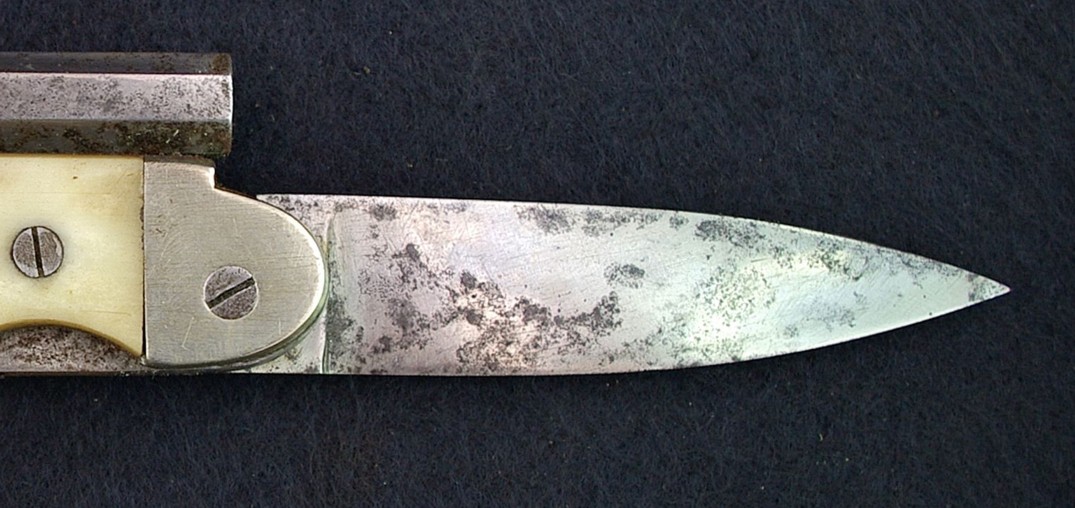
firing. The gun is 5" long overall has a 4" barrel with an 8mm bore and a 3.5"
blade. The grips are horn.
This gun has BERNARD
engraved on the top barrel flat but no other maker's marks, proof mark or
anything to give an indication as to when or where it was manufactured. It was
probably made circa 1850, possibly in Germany.
The pistol has some
similarities to that illustrated (ill. 75, p. 58) in Gordon Frost's Blades and
Barrels of which he writes: "it is most unusual to find an eating utensil
incorporated in a knife-pistol of this nature which makes this piece doubly
rare". The gun shown here, unlike Frost's, does not have trigger which
automatically drops down when the hammer is cocked. The trigger needs to be
manually drawn down.
Gordon Frost suggests
in his book that Philip Unwin, partner in the cutlery business to James Rodgers,
first conceived the idea of combining a pistol with a folding pocket knife. The
first Unwin and Rodgers combination pistol had a gimlet-type trigger and a
fold-down hoof pick which also served as a handle for the pistol. These features
must have been popular as they are found, with minor variations, on many other
knife-pistols made by other makers between 1840 and 1900.
Contemporary with
Unwin and Rodgers, Henri Boden made very similar knife-pistols in Belgium. Many
of Boden's guns featured gimlet triggers. These were designed to be screwed into
a door frame, the gun loaded with a blank charge, and left there as a burglar
alarm. If the door should be opened, the pistol would supposedly fire, awakening
the owner to the fact he was in danger.
Dr Hugo