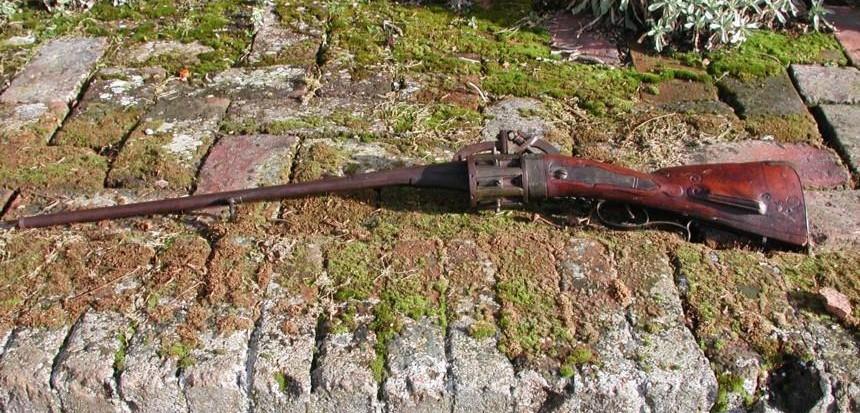
Petronelle
If we
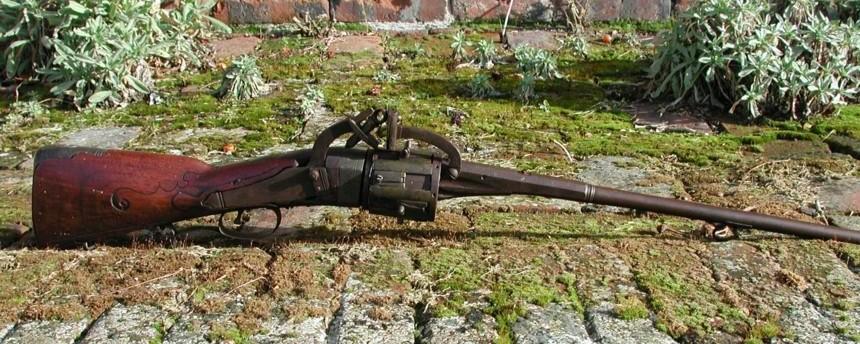
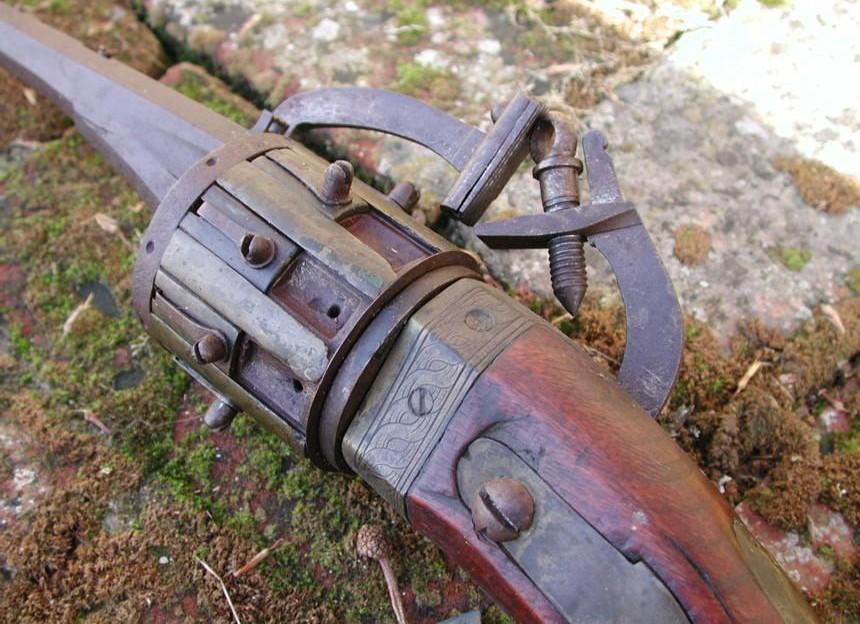
expect the shape of the stock, the weapon presented here - likely featuring a
cylinder with a wooden body - is practically identical to a petronel shown in
the Tojhuus Museum of Copenhaguen, dated 1597 and made by a Nurnberg gunsmith
named Hans Stopler.
Together
with the famous snaphaunce revolver now in the Royal United Services Museum of
London, dated 1650 and featuring an action in which the cylinder is turned and
locked by the action of cocking the hammer (see Colt), another3-barrelled
petronel dated 1540 and now in the Doge's Palace of Venice, Italy, and the
Puckle Gun, the Tojhuus petronel is considered one of the very first repeaters
ever produced. Very interesting piece.
I think
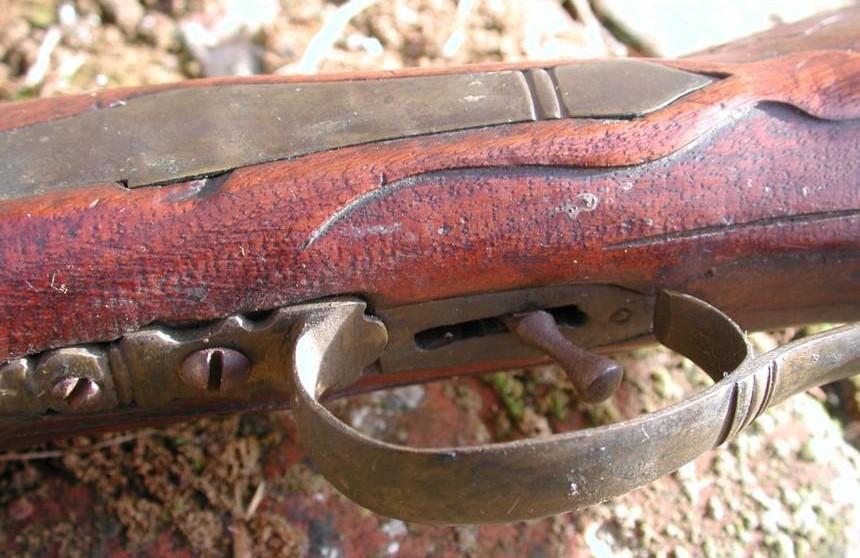
however - actually I'm practically sure - that the weapon presented by Guillaume
is a more recent restoration attempt (maybe 18th century), coupling the original
metal parts to a stock coming from a luxury musket of later manufacture.
Compared
to the shape of the stocks in use during the 1500's, this one looks anachronic.
It is designed to be held on the shoulder like later muskets and not to be hald
against the chest like the pertonels of the time.
The
mounting is catastrophic, and the weapon lacks a long forewood that normally
runs from the receiver to the muzzle.
Also the
trigger guard seems of a later model. However, the remainig metallic components
look original.
Referring to the current models of the time, I think the wood should be
decorated with ivory, bone and mother-of-pearl inlays instead of volutes
carvings.
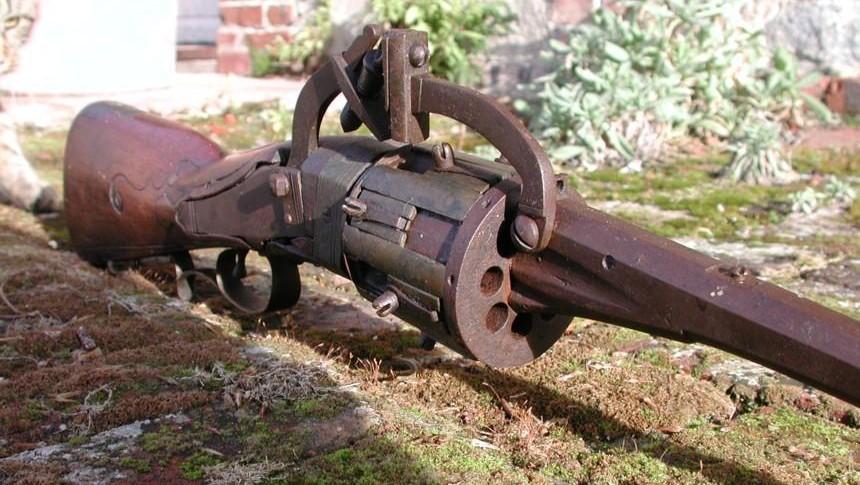
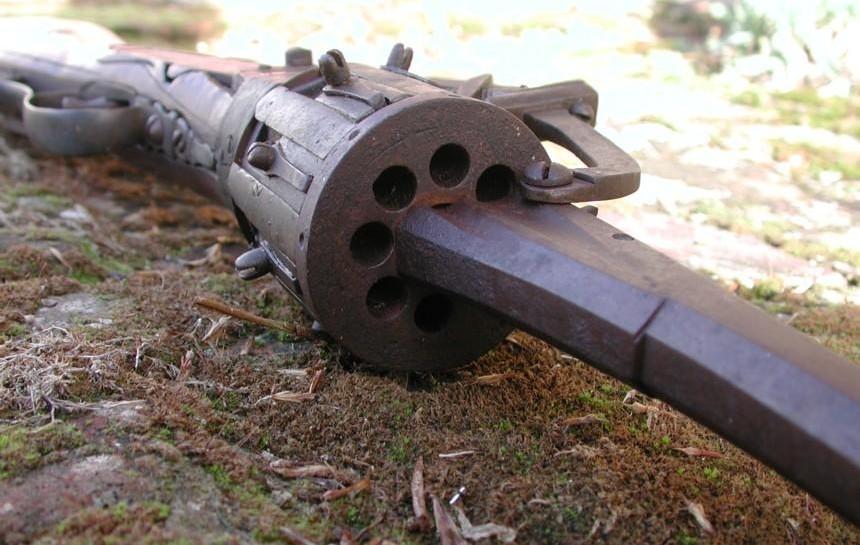
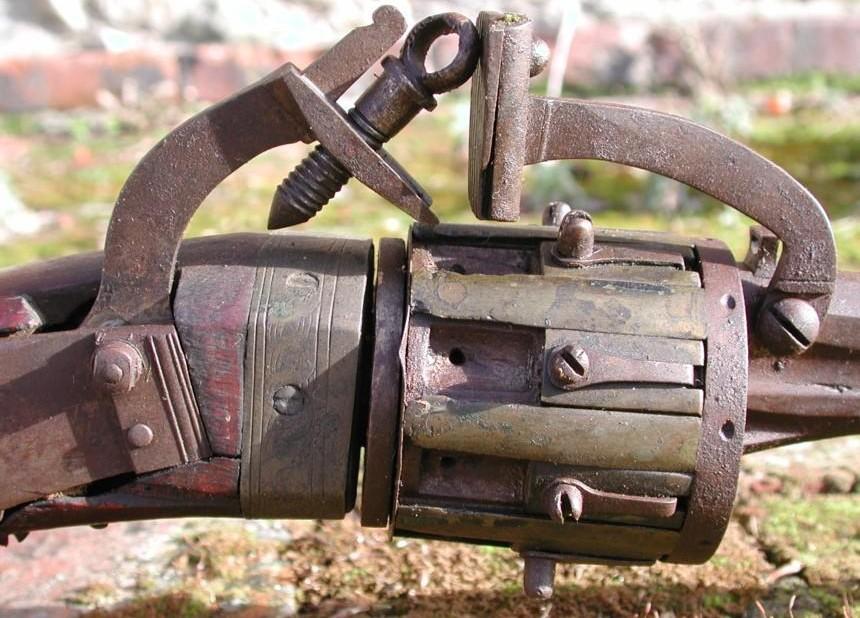
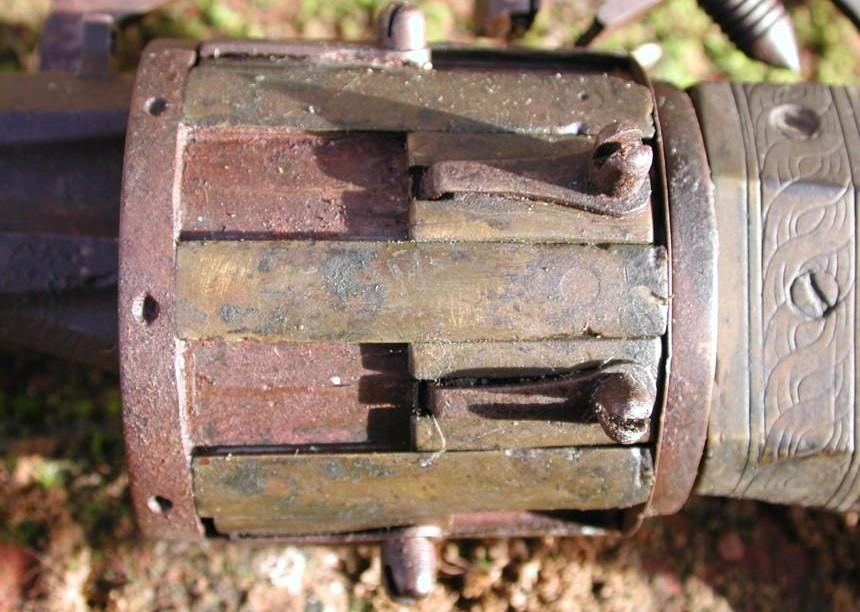
Most amazing to me is the wooden cylinder. Considering
the high pressures that occur in the chambers - even with the low performance
blackpowder in use in those days - this feature looks very dangerous to me.
Unfortunately I can't say more about this, since the pictures of the
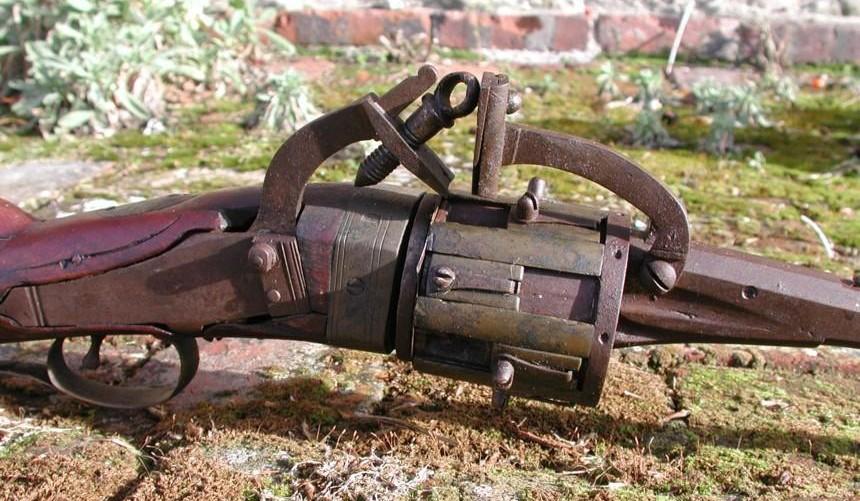
The
cylinder is turned by hand.
When it
falls down to fire the shot, the hammer opens the pan cover by striking the
protruding screw head of its spring.
Marcel